Table of Contents
Why Search Engine Reputation Is the New Executive Business Card
An executive’s online presence is inseparable from their company’s credibility. If an executive isn’t perceived as trustworthy, authentic, innovative, and focused, the company itself becomes decidedly questionable. Today’s most influential stakeholders – people such as investors and potential partners – often follow the mantra, “Search first, decide later.” It’s your search engine reputation that sets the tone for further discovery and exploration.
And what’s at the top of crucial search results? On Google, more often than not, you’re looking at a Wikipedia page, which in turn powers the also highly visible Google Knowledge Panel and AI Overview. On AI tools like ChatGPT, Gemini, and Perplexity, we get a synthesis of the world’s information – but these tools also heavily depend on Wikipedia and other sites that appear in first page Google results.
These elements are now your unofficial biography.
Managing this biography and your overall online footprint is not just good PR, it’s strategic risk management. It makes us cringe to think of highly visible, and yet unprotected assets, like Wikipedia, left to fend for themselves.
Let’s talk about it.
The Anatomy of an Executive’s Search Engine Reputation

On Google
When someone searches your name, the results are arranged tidily based on Google’s perception of available sources’ trustworthiness, authority, and user-friendliness. Typically what we see is the following:
Search Result | Focus |
Wikipedia; Google Knowledge Panel; AI Overview | Wikipedia and the Knowledge Panel are a primary source for AI platforms; all three are dominant page 1 results |
LinkedIn; press coverage | These sources provide professional context and whatever buzzworthy news is circulating, whether old or recent |
Images; social profiles; professional websites | These sources provide biographical information and recent soundbites and talking points |
On LLMs
As we all know, LLMs like ChatGPT give a synthesized answer to user queries. You won’t see specific search results like you will on Google, but you will see a complete answer designed to inspire follow-on questions.
What’s interesting is both what’s said and how it’s sourced. And while the AI world is still changing (so is Google, for that matter), it’s been around long enough that we have some interesting data to dive into when we talk about something as crucial as the sources behind a search engine reputation.
Here’s a sample of that data, pulled from around 76.7 million AI Overviews, 957,000 ChatGPT prompts, and 953,500 Perplexity prompts from June 2025:
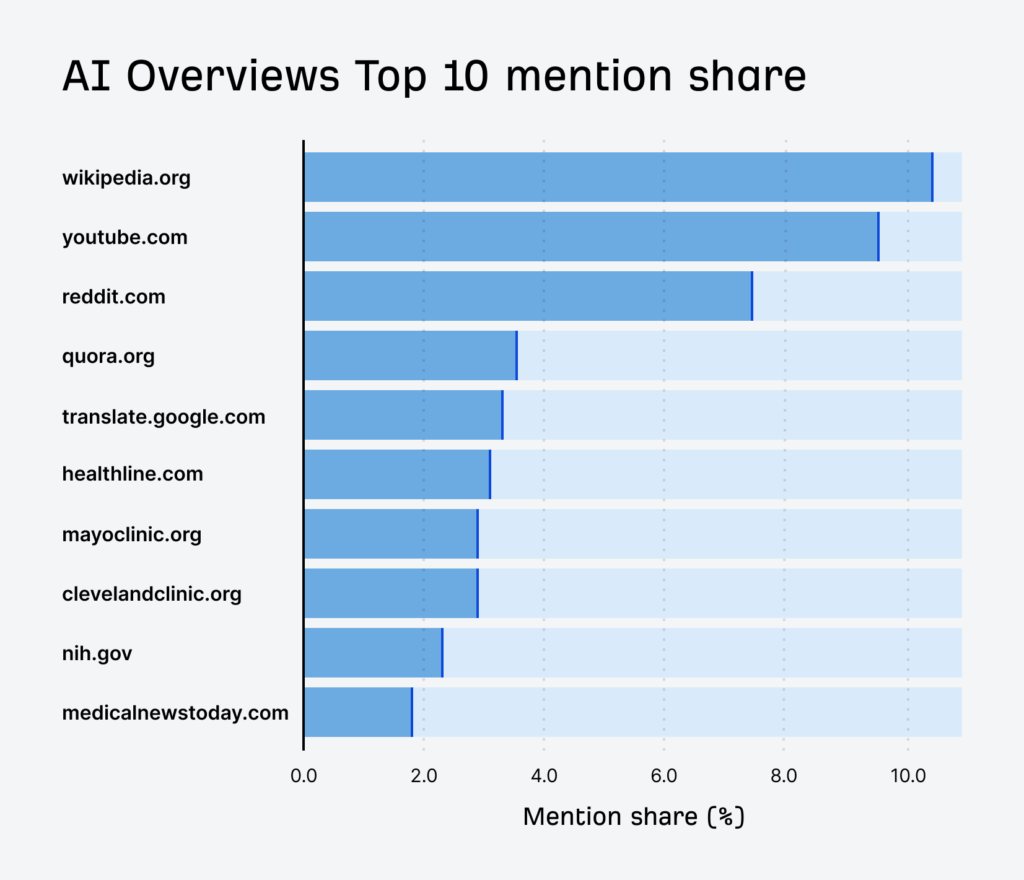
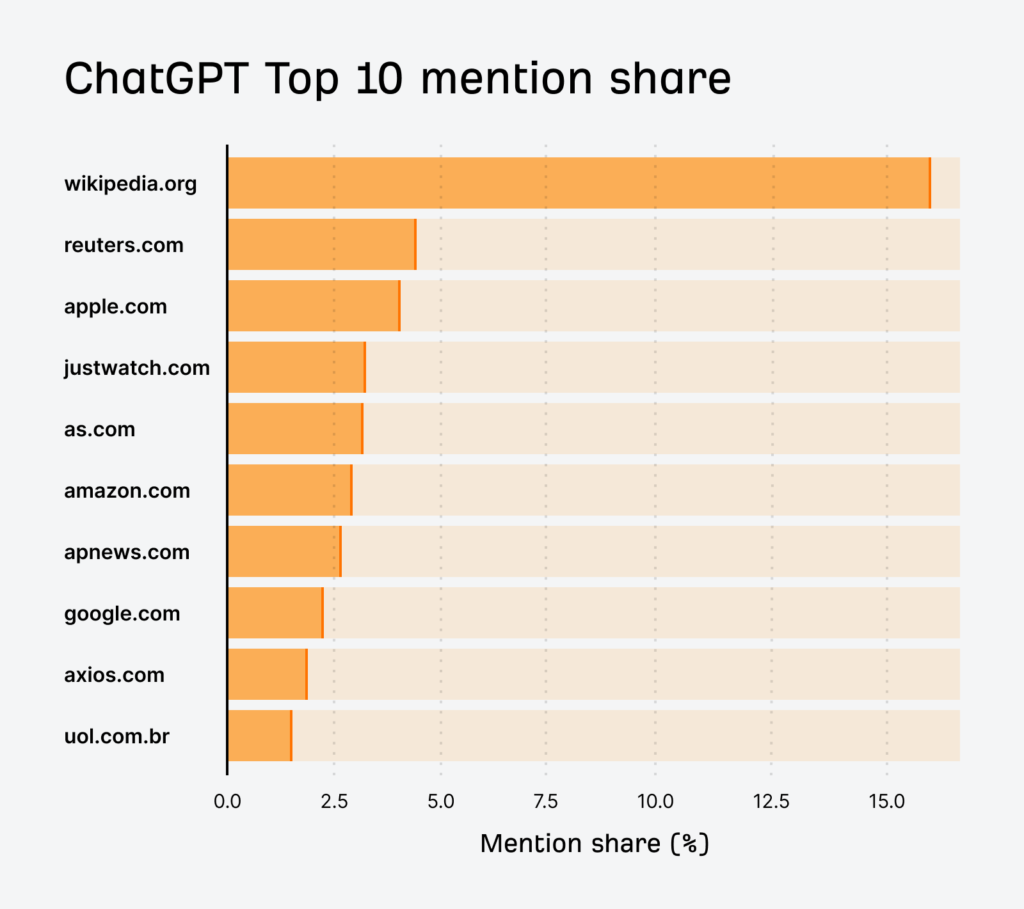
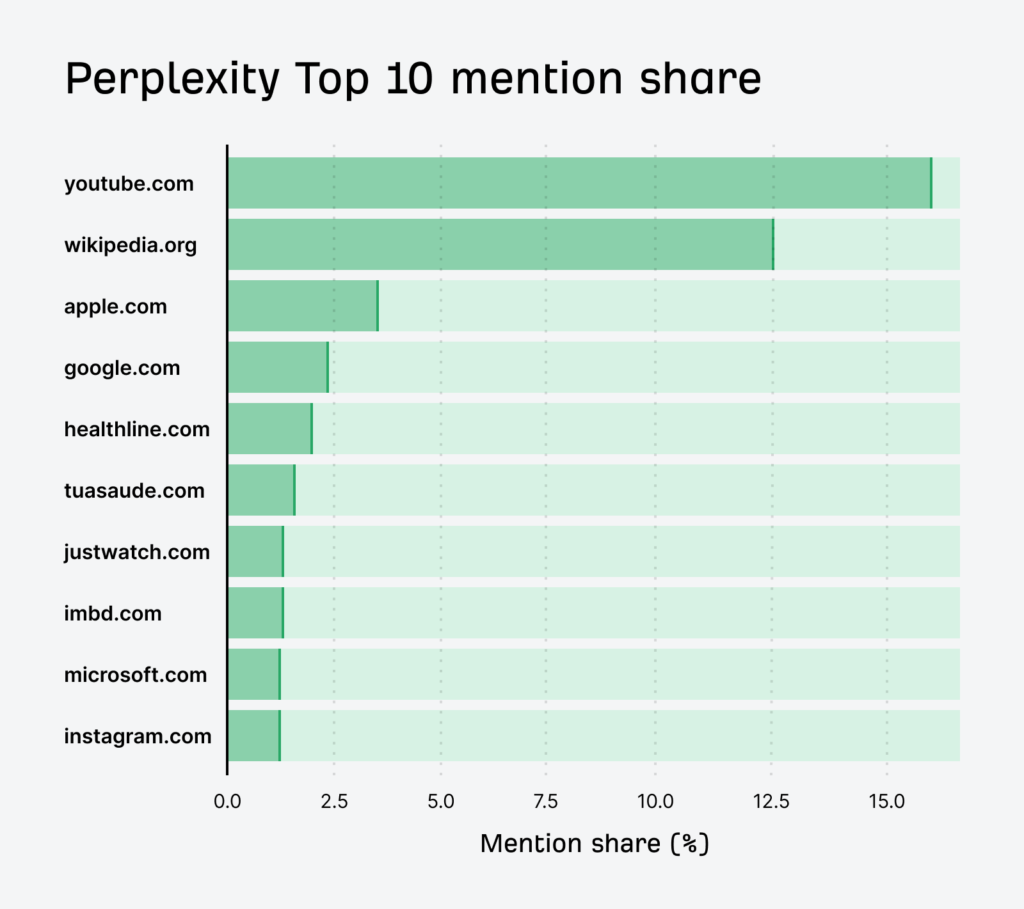
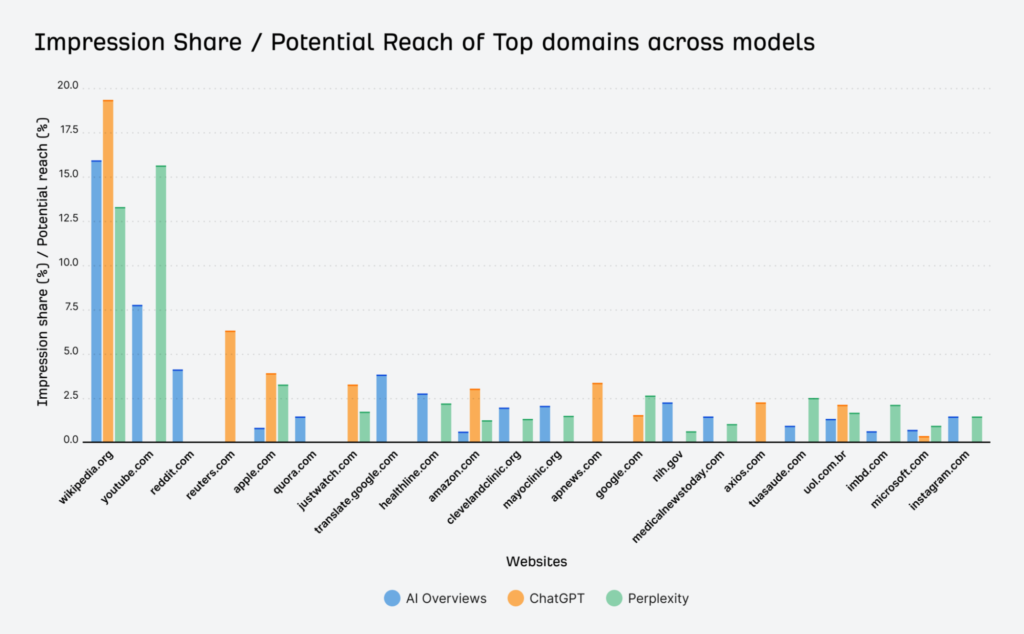
You can see why Wikipedia is top-of-mind for many of our clients. It’s a platform we decided to specialize in ten years ago, and that’s an investment that continues to pay off. While we can’t honestly claim we saw the rise of AI all the way back then (but how cool would that be?), we can say knowing how to integrate Wikipedia into a search engine reputation strategy never stops being useful.
However, part of knowing how useful it is, is knowing how it is one part of a whole. Search engine reputations aren’t built by one or two or even ten platforms. They are built by history and crises, news releases and viral memes, biographical information and customer reviews. This means reputation optimization strategies must be holistic.
Executives need:
- A complete and accurate Wikipedia presence
- Credible third-party coverage
- These sources are not only valid search results in their own right, but also provide the citations that Wikipedia requires for page content creation
- Thought leadership posts that answer critical industry and user questions to bolster authority and visibility
- Consistent messaging across all high visibility sources so Knowledge Panels, AI Overviews, and other AI results understand who you are and what you do
- Interaction with customer reviews and conversations across Reddit, Google, social media, Yelp!, and more
How Search Engines (and AI) Build Your Reputation

Search engines and AI take individual articles, posts, videos, and comments and do a few things:
1. Evaluate them on an ongoing basis. Evaluation is based on principles like Google’s E-E-A-T, user interactions, and follow and nofollow links.
- Research shows that Gemini and ChatGPT weigh nofollow links the highest over regular follow links.
- Google’s AI Overviews and Perplexity weigh regular links the highest and nofollow the least.
- E-E-A-T stands for Expertise, Experience, Authoritativeness, and Trustworthiness
2. Highlight top choices. On Google, this means deciding which links to display and in what order. It also means populating snippets and People Also Ask questions for zero-click answers.
For LLMs, this highlighting takes place behind the scenes in the sources used to fuel answers to user questions. Sources can be displayed for people to click-through should they desire.
3. Synthesize billions of data points. AI Overviews and generative AI tools synthesize an impossible number of data points and trot out the information neatly in a natural language package. Your reputation is now summarized automatically.
For the most flattering search engine reputation, you want an accurate, well-sourced, complete narrative available. That narrative will be amplified across Google and AI, which makes it well worth your effort to ensure its existence.
If you’re someone who prefers the stick to the carrot – the flip side is also true. If search engines and LLMs pull from outdated or negative sources, that perception scales instantly.
Common Reputation Risks Executives Overlook
Brand and leadership risk management depend on search engine reputation being handled efficiently. These are the most common reputation risks executives overlook:
Wikipedia pages being incomplete, misrepresentative, or non-existent
Wikipedia is a go-to source for search engines and LLMs. Whatever information is on your Wikipedia article is going to be shared. If that information is incomplete or misrepresentative, you have a problem on your hands. You can’t assume that sources with the correct information – maybe official biographies, press releases, or speaker profiles – will be incorporated into AI summaries or profiled highly on search results pages. This might happen, but it also might not. It also might confuse AI and lead to the creation of strange summaries.
If the information is non-existent, this leaves your reputation to be defined by lower-authority sources, sources that you may not be able to influence. While Wikipedia is complicated at best to work with, it offers an open avenue for engagement.
Now, even if your Wikipedia article is precisely the way you want it to be, don’t get complacent. Changes happen without notice. This platform must be continuously monitored.
Outdated or inconsistent bios across platforms
Discrepancies across platforms confuse search engines and LLMs. Bios should always be updated and consistent. Review LinkedIn, your company’s website, Crunchbase, Forbes, Bloomberg, and the bio you share with the media.
Old or inaccurate news resurfacing in results
Oftentimes executives are focused on the here-and-now and the next five years. Google, ChatGPT, Perplexity, and all the rest do not feel the same way. Sources from years and years ago can still be referenced and prominently featured if they receive a lot of user interaction and are shared on a site with a high domain authority.
Ignoring these results is not going to make them go away. It takes a targeted effort to diminish their visibility and discoverability.
Negative press or reviews connected to the company showing under personal searches
As an executive, your reputation is not only tied to your name. It is tied to your company as well as other related search results, such as past companies, and past and present colleagues. All search results must be audited regularly.
Building and Protecting a Strong Search Engine Reputation

Taking control of your narrative and protecting your search engine reputation means establishing strong digital authority. Here’s what you need to know.
- Establish yourself on high-profile sites: Claim your Google Knowledge Panel, secure validated profiles across sites such as Forbes and Bloomberg, and secure and optimize a complete, neutral, and well-sourced Wikipedia article to influence your Knowledge Panel, AI Overviews, and generative AI tools.
- Audit regularly: You need to know what the internet is saying about you. This can change drastically after a significant news event, but even subtle changes need to be monitored.
- Own your narrative: Owned profiles should not be ignored. They are a strong way to push consistency. Focus on publishing bylined content, update your bios as needed, and ensure social profiles deliver consistent messaging.
- Improve discoverability and visibility: Secure placements on high-authority sites to influence AI and search signals; and also to provide the third-party sources that Wikipedia requires for any content edits.
Do not ignore tried and true content rules. You want to provide well-written, valuable content that high-authority sites will want to feature. Whatever you’ve done in the past to rank on the first page of Google will affect AI. Ahrefs has shows that traditional and AI search results do overlap:
– 76.10% of AI Overview-cited pages rank in the top 10 of traditional search results
– 9.50% of AI Overview-cited pages rank between position 11-100
– 14.40% of pages cited in AI Overviews do not rank in the SERPs (i.e. rank below position 100). This is why a comprehensive AI audit is a necessary part of any search reputation strategy. It’s sometimes mind boggling for people what the internet has held onto.
- Monitor changes: Set up alerts for shifts in your search footprint. It’s important to react proactively, if at all possible, but quick reactivity is better than ignorance. You’ll also want to track Wikipedia edits in real time. Remember, Wikipedia can be edited by anyone at any time.
The Executive Advantage: Turning Reputation into Influence
Search engine reputation management is worth its weight in gold. You see, a strong search engine reputation directly impacts influence, opportunity, and trust.
Thought Leadership and Speaking Opportunities
When an executive consistently shares their expertise across platforms in ways that resonate with their target audiences, they become a go-to source of information. This in turn drives increased recognition. These executives become top of mind when another brand or organization needs a sponsored post or speaker.
Media Trust
Journalists and media outlets often research sources online. When an executive has a strong search reputation – one that showcases defined areas of expertise and positive, engaged audiences – the media perceives them to be someone credible and trustworthy. This makes them more likely to be sought out for interviews or quoted in content.
Investor Confidence
77% of adults say a CEO’s reputation influences their decision to invest in a company.
And we know that reputations are often made and discovered online. So what are investors looking for when they start a digital search?
They want to see stability, vision, expertise, and authority. For example, they’ll look for whether or not an executive participates in panels and shares thoughtful content. Does he or she add value to the company’s intellectual capital?
A strong search reputation builds up an executive as a competent, trustworthy leader. This reassures investors that there is a reduced risk associated with supporting the company.
Positive Feedback Loop
When a strong search reputation leads to more thought leadership opportunities, features across media platforms, and a higher authority across the board, executives wind up with a positive feedback loop: their credibility and online presence are continuously boosted, which leads to even greater trust and opportunities.
Learn How to Manage the New Search Engine Reputation

Your name, brand, and title are already being searched. With first impressions shaped by AI summaries, your reputation isn’t what you say, it’s what search engines and LLMs say about you. Take the initiative to amplify your credibility and influence by monitoring, investing in, and intentionally shaping your digital footprint. Leaders who do so, will see their ideas travel further and their story told accurately – everywhere it matters.
If you want to boost the impact of your search engine reputation, contact us today.
The Mather Group LLC is a digital marketing agency. We specialize in enhancing online reputations through authentic content and expert digital brand management. Clients trust us with Wikipedia, GEO & SEO, LLM optimization, search reputation, and more. Don’t like how you’re showing up online? Let’s talk.